Best Electric Scooters in India 2026
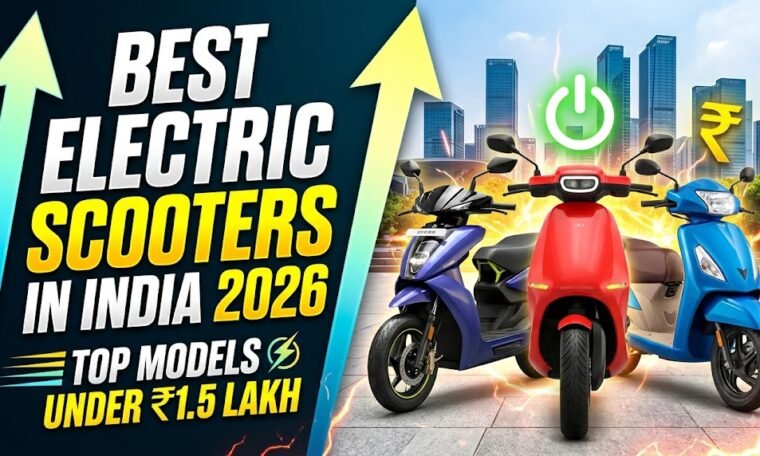
The best electric scooters in India 2026 are becoming increasingly attractive to commuters who want lower running costs, modern technology and an easy-to-ride alternative to petrol scooters. With more manufacturers entering the EV market, buyers now have plenty of choices across budget, range, performance and features.
The ₹1.5 lakh price segment is particularly interesting because it includes several mainstream electric scooters with useful range, connected features, practical storage and improved battery technology. Current market listings include models such as the Ather Rizta, TVS iQube, Ola S1 X, Vida VX2 and Bajaj Chetak variants within or around this budget.
The government has also extended the PM E-Drive incentive for eligible electric two-wheelers through March 31, 2028, although eligibility, vehicle price limits and subsidy amounts depend on the scheme’s rules.
So, which electric scooter should you buy in 2026? Let’s look at the major options and the features that matter most.
Why Electric Scooters Are Popular in 2026
Electric scooters are particularly suited to India’s crowded cities.
They offer instant torque, quiet operation and simple controls. For people commuting to work, college, markets or nearby destinations, an EV can eliminate frequent petrol-station visits.
Running costs can also be attractive. The actual saving depends on electricity prices, charging method, riding conditions and the scooter’s efficiency.
Another major advantage is convenience. If you can charge at home, you can potentially begin each morning with a charged battery instead of making a separate trip to refuel.
1. Ather Rizta
The Ather Rizta is designed with family practicality in mind rather than purely sporty performance.
Current market listings put the Rizta’s variants within roughly the ₹1.1 lakh–₹1.45 lakh range in some listings, while battery options and claimed range vary by variant.
The scooter has also achieved significant market acceptance. Ather crossed 3 lakh cumulative Rizta sales in April 2026, according to reporting on the company’s milestone.
Key Features
- Family-focused design
- Large under-seat storage
- Connected technology
- Digital display
- Multiple battery options
- Safety and convenience features
The Rizta’s 34-litre storage capacity is particularly useful for family users.
Who Should Buy It?
The Rizta is worth considering if you want a comfortable electric scooter for daily family and city use.
2. TVS iQube
The TVS iQube is another major name in India’s electric scooter market.
Its appeal comes from combining a conventional scooter-like design with electric technology.
The iQube range includes different variants, so specifications, battery capacity and range depend on the model selected.
Key Features
- Practical design
- Connected features
- Digital instrument display
- Multiple battery options
- Comfortable riding position
- Established manufacturer network
TVS has also been a significant player in India’s electric two-wheeler market. The iQube has previously ranked among the country’s leading electric scooters by sales.
Who Should Buy It?
The iQube can be a strong choice for buyers who want a familiar scooter experience from an established two-wheeler manufacturer.
3. Bajaj Chetak
The Bajaj Chetak combines a recognizable name with modern electric technology.
The Chetak family has expanded considerably, with different versions targeting different price points.
For example, the Chetak C2501 was introduced at ₹91,399, according to Hindustan Times’ April 2026 report.
Other Chetak variants can approach or exceed the ₹1.5 lakh threshold depending on configuration.
Key Features
- Premium-looking design
- Metal-inspired styling
- Connected technology
- Digital instrumentation
- Multiple variants
- Established Bajaj service ecosystem
A June 2026 comparison listed the Chetak C3501 at about ₹1.41 lakh ex-showroom in Delhi with a claimed IDC range of 153km.
Who Should Buy It?
Chetak makes sense for buyers who value styling, brand familiarity and a more traditional scooter design.
4. Ola S1 X
The Ola S1 X is positioned toward buyers looking for a more affordable entry into Ola’s electric scooter range.
Current listings show S1 X variants below the ₹1.5 lakh mark, with different battery configurations and specifications.
Key Features
- Modern design
- Multiple battery options
- Digital technology
- Connected features
- Competitive pricing
- Suitable for urban commuting
The S1 X is particularly interesting for younger buyers who want an electric scooter with a modern appearance without moving into the premium price bracket.
5. Vida VX2
The Vida VX2 is another interesting option in the affordable electric scooter category.
Current listings show VX2 prices significantly below ₹1.5 lakh, with the model offering a removable-battery setup and claimed range of up to around 142km, depending on configuration.
Why the Removable Battery Matters
A removable battery can be useful for people who don’t have convenient access to a charging point near their parking area.
Instead of bringing the entire scooter to a charger, the battery can be removed and charged separately where supported.
Key Features
- Removable batteries
- Practical urban design
- Connected technology
- Digital instrument cluster
- Multiple variants
6. TVS Orbiter
For buyers looking for a simpler and more affordable electric scooter, the TVS Orbiter is another model worth considering.
Current listings show the Orbiter around ₹99,900, although prices and availability can change.
It is positioned as a practical urban electric scooter rather than a high-performance model.
Best For
- City commuting
- Short daily trips
- Budget-conscious buyers
- Riders wanting a mainstream manufacturer
7. Vida V2
The Vida V2 family also sits within the affordable electric scooter space.
Current listings show prices ranging from approximately ₹74,000 to ₹1.20 lakh, depending on the variant.
Its removable-battery approach can make charging easier for users who don’t have a dedicated home charging point.
Electric Scooter Price Comparison
Here is an indicative overview of some popular options:
| Electric Scooter | Approx. Price* | Range/Highlight |
|---|---|---|
| Vida VX2 | ₹44,990–₹84,800 | Up to ~142km |
| TVS Orbiter | Around ₹99,900 | City-focused |
| Ola S1 X | ₹79,999–₹1.09 lakh | Multiple variants |
| Vida V2 | ₹74,000–₹1.20 lakh | Removable batteries |
| Ather Rizta | ₹1.10–₹1.45 lakh in listed variants | Up to ~160km claimed |
| Bajaj Chetak variants | Varies by model | Up to ~153km on selected version |
| TVS iQube | Varies by variant | Multiple battery options |
*Prices and specifications vary by variant, city and applicable incentives. Always check the manufacturer’s latest price before purchasing.
Claimed Range vs Real-World Range
One of the biggest mistakes buyers make is looking only at the advertised range.
An electric scooter’s real-world range can be affected by:
- Rider weight
- Riding speed
- Traffic
- Road conditions
- Temperature
- Tyre pressure
- Passenger weight
- Use of lights and electronics
- Riding mode
For example, an older Autocar India comparison found that claimed and practical range figures can differ significantly across electric scooters.
Therefore, don’t buy a scooter solely because it advertises the highest range.
How Much Does It Cost to Charge an Electric Scooter?
Charging costs depend on the battery capacity and your electricity tariff.
For example, a scooter with a roughly 3kWh battery would require around 3 units of electricity for a full charge in simplified terms, although actual wall-to-battery consumption can be higher because of charging losses.
Your approximate charging cost can therefore be estimated as:
Battery capacity × electricity cost per unit = basic charging cost
The actual figure will depend on charging efficiency and battery conditions.
Home Charging vs Public Charging
Home charging is usually the most convenient option for regular users.
Before buying an EV, check whether your parking area has access to a suitable electrical connection.
Public chargers are useful for longer trips, but charging availability can vary significantly between locations.
If you primarily ride around your city, home charging may be enough for most daily use.
What to Check Before Buying an Electric Scooter
Don’t focus only on price.
Consider these factors:
1. Battery Warranty
Understand the battery warranty period and conditions.
2. Real-World Range
Look for independent tests and owner experiences rather than relying exclusively on claimed figures.
3. Charging Time
Check both standard and fast-charging capabilities where available.
4. Service Network
A good service network can be extremely important over several years of ownership.
5. Spare Parts
Ask about the availability and cost of important replacement components.
6. Battery Replacement Cost
Understand potential long-term battery replacement expenses before buying.
7. Storage
If you regularly carry a helmet, groceries or other items, boot capacity matters.
8. Safety
Check braking systems, tyres, stability and available safety technology.
Which Electric Scooter Is Best for Daily Commuting?
For short city commutes, you don’t necessarily need the biggest battery.
A scooter with adequate range, comfortable ergonomics and convenient charging may be a better choice.
The TVS iQube, Ather Rizta, Bajaj Chetak and Ola S1 X cover different parts of the mainstream market and can be considered according to your budget and requirements.
Which Is Best for Families?
Family buyers should prioritize:
- Comfortable seat
- Stable handling
- Good storage
- Reliable braking
- Easy charging
- Practical range
- Service support
The Ather Rizta is particularly designed around family practicality, while the TVS iQube and Bajaj Chetak offer more traditional scooter formats.
Is ₹1.5 Lakh Enough for a Good Electric Scooter in 2026?
Yes.
The ₹1.5 lakh budget gives buyers access to a wide range of electric scooters, from straightforward city commuters to more feature-rich family models.
In fact, current listings show numerous electric scooters below ₹1.5 lakh, including models from Ather, TVS, Bajaj, Ola and Vida.
However, remember that the ₹1.5 lakh figure can mean different things depending on whether you’re discussing ex-showroom, on-road or post-incentive pricing.
Always compare the final on-road price in your city before making a purchase.
Final Verdict
The best electric scooters in India 2026 under ₹1.5 lakh offer a compelling combination of affordability, convenience and modern technology.
The Ather Rizta is a strong family-focused option. The TVS iQube offers a familiar package from an established manufacturer. The Bajaj Chetak appeals to buyers who value classic styling and brand familiarity. The Ola S1 X focuses on affordable modern EV technology, while the Vida VX2 and V2 provide the flexibility of removable batteries. The TVS Orbiter is another practical option for urban commuting.
Ultimately, the best electric scooter isn’t necessarily the one with the highest claimed range or the most features. It is the one that fits your daily distance, charging situation, budget, comfort requirements and local service availability.
With India’s electric two-wheeler market continuing to expand and the PM E-Drive incentive now extended through March 2028, buyers have more reasons to consider an EV in 2026—but checking the latest local price, subsidy eligibility and specifications remains essential before booking